

Strongest Week Since 2020! Gold Surges as Goldman Sachs Raises Target to US$5,400
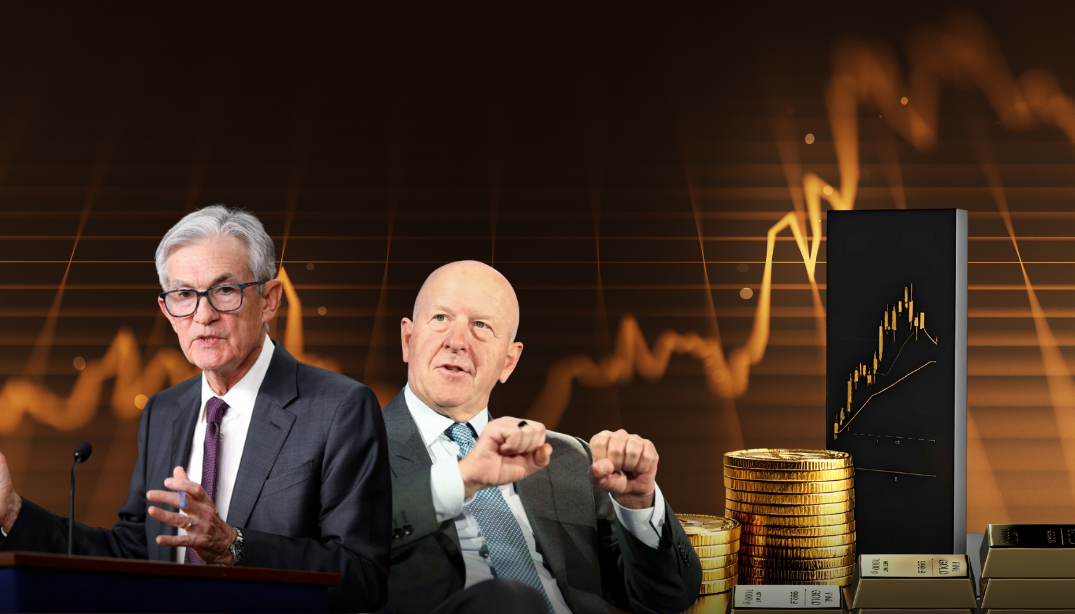
Jakarta, MetalNews Digital - Global gold prices surged above US$4,950 per troy ounce, placing the metal on track for its strongest weekly performance since March 2020. The rally was driven by rising geopolitical uncertainty, a weakening US dollar, and growing market expectations of monetary easing by the United States Federal Reserve toward the end of 2026.
The increase in gold prices was supported by a combination of global factors, including heightened geopolitical risks and the release of the United States Personal Consumption Expenditures data, which indicated a continued easing of inflationary pressures. This development strengthened market confidence that inflation in the United States is moderating, thereby opening room for potential interest rate cuts over the medium to long term.
In the latest trading session, spot gold traded near its all time high, while the United States dollar weakened against major currencies. These conditions further reinforced gold’s role as a safe haven asset amid ongoing volatility in global financial markets.
Impact on the Physical Gold Exchange
The global rally in gold prices was reflected in domestic trading activity. On the JFXGOLD X Physical Gold Exchange, gold prices recorded a 3.21 percent increase within one trading session, reaching US$4,941.21 per troy ounce, equivalent to IDR 2,725,043 per gram.
This movement illustrates the effective transmission of global gold price fluctuations into exchange based physical gold trading, alongside rising domestic investor interest in safe haven assets amid persistent global uncertainty.
Geopolitical Risks Support Safe Haven Demand
According to Robby Leonardo, Head of Research Analyst and Market Development at Metalbank Global Monetary, the surge in global gold prices occurred amid escalating geopolitical tensions.
He noted that developments related to NATO dynamics, geopolitical discussions surrounding Greenland, and renewed tariff considerations have increased investor caution and placed pressure on risk assets.
“In such conditions, investors tend to reallocate funds toward gold as a safe haven instrument. Market participants increasingly view geopolitical uncertainty not as a temporary factor, but as a structural tail risk that may persist for an extended period, thereby supporting long term demand for gold,” Robby stated to MetalNews Digital.
Declining Real Yields and Federal Reserve Expectations
In addition to geopolitical factors, declining real yields in the United States have been a key driver of the gold rally. Disinflation trends reflected in the PCE data, combined with rising expectations of future interest rate cuts, have weighed on real yields of United States Treasury bonds.
Lower real yields reduce the opportunity cost of holding non yielding assets such as gold, thereby increasing its attractiveness among global investors. Based on CME FedWatch indicators, market participants are increasingly pricing in additional Federal Reserve rate cuts extending toward the end of 2026.
Structural Support from ETFs and Central Banks
From a fundamental perspective, the gold market continues to receive strong structural support. Throughout 2025 and early 2026, inflows into gold backed exchange traded funds increased significantly, reflecting renewed institutional interest in physical gold.
At the same time, gold purchases by central banks have remained robust, particularly among emerging economies seeking to diversify their foreign exchange reserves. Private sector demand has also strengthened as gold is increasingly used as a hedge against long term global policy risks.
Cross Asset Market Developments
The rise in gold prices occurred alongside relatively stable movements across other financial markets. The USD to IDR exchange rate traded within a narrow range, supported by commodity inflows and liquidity management measures implemented by Bank Indonesia.
In equity markets, investor interest in United States stocks remained selective. Domestically, Indonesia’s Composite Index continued to receive support from domestic funds and strong performance in commodity related equities.
Market Sentiment and Potential Correction Risks
From a market sentiment perspective, net inflows into major gold exchange traded funds remained moderate over the past week. In derivatives markets, options activity indicated an increase in downside protection strategies, although demand for high convexity instruments remained present. This reflects expectations of continued market volatility.
Despite strong medium term fundamentals, market participants remain cautious of potential short term corrections. Stronger than expected United States macroeconomic data, such as employment figures, inflation data, or updated PCE readings, may push bond yields higher and temporarily weigh on gold prices.
Goldman Sachs Raises Gold Price Outlook
In line with the ongoing price rally, Goldman Sachs raised its gold price forecast for the end of 2026 to US$5,400 per troy ounce, from the previous estimate of US$4,900.
The revision was based on expectations of continued gold accumulation by central banks, private investors, and emerging market economies. Goldman noted that spot gold recently reached a record level of US$4,887.82 per troy ounce, marking an increase of more than 11 percent in 2026, following a 64 percent surge in 2025.
The bank also projects average annual central bank gold purchases of approximately 60 tons in 2026. In addition, gold ETF holdings in Western markets are expected to rise, supported by the potential for a cumulative 50 basis point interest rate cut by the Federal Reserve.
Nevertheless, Goldman cautioned that a significant decline in perceived long term global policy risks could trigger macro hedge unwinding, which may place downward pressure on gold prices.
Gold transactions via the JFXGOLD X Physical Gold Exchange are available through the METALGO+, NUNOMICS, and Pospay Gold features within the Pospay application.
Disclaimer
The price information and market analysis provided are for informational purposes only and do not constitute investment advice. Market conditions may change at any time. Readers are advised to conduct independent analysis before making investment decisions.
For more updates, follow MetalNews.